



 An inverter makes it possible to use household appliances in an RV–without a generator
ry to imagine if electricity were like cellular service, where some places you travel have it while others don’t.
That’s the gamble that all RVers take when they head out onto the open road with no agenda. You might find yourself at a cozy local RV park with full hookups. Then again, maybe you’ll stop for the night under the stars of a national park campsite accompanied by little more than the hum of an absorption refrigerator fan and a few 12-volt DC lights to remind you of civilization.
That’s not necessarily a bad thing — unless you’re really hungry and the only thing you have is a frozen dinner. You turn to find the microwave staring back at you with its sullen, tempered glass eye…mocking you. The TV, meanwhile, offers only a cold and expressionless field of empty space in exchange for your longing glance. Thank goodness for a dogeared copy of Huck Finn and an old bag of potato chips.
It doesn’t have to be this way. With the right power inverter, you can take advantage of the 12-volt battery power in your trailer or motorhome to run the household appliances you’ve become so accustomed to — anywhere. Sure, we all like to get away sometimes, but it’s nice to know that if you want to use a hair dryer to get ready for your glam hike, or the convection microwave to crisp up some sustainably raised, uncured apple wood smoked bacon, you can. That is the beauty of having an inverter in your RV: it changes 12-volt DC power into household-quality power, without generator noise.
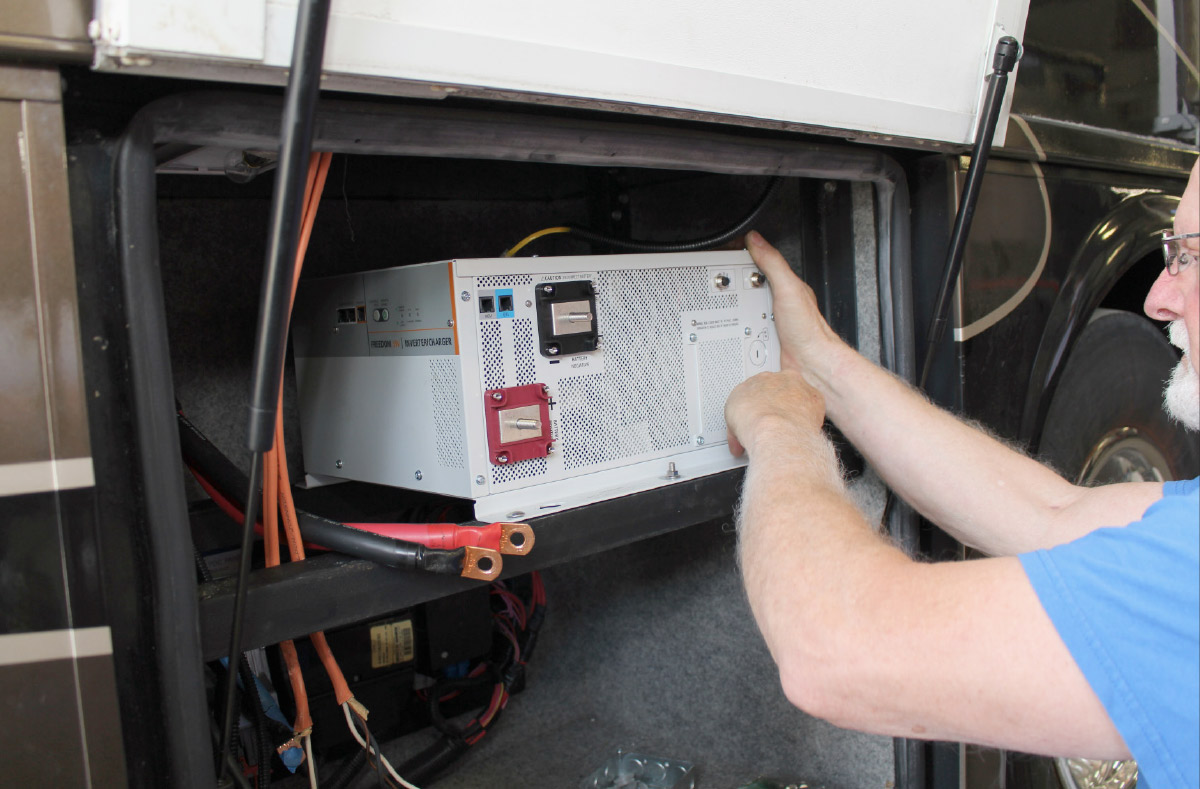
At the risk of going too far back to basics, consider that there are two types of electricity in an RV. The most common type is 12-volt DC power, which comes from the “house” battery(ies). The other, less-frequently used type is 120-volt AC power — which is the same thing you get in a house when you plug into a wall socket.
“Each type of power has its own benefit,” explained Don Wilson, sales application engineer for Xantrex, one of the leading manufacturers of inverters for RV and marine applications. “DC power is storable, so you can use energy to charge a battery, then move it to a remote location and use that stored energy to run your devices. AC power is easily changed if you think about different types of appliances that you have.” For example, Wilson notes that some AC devices run on 17 volts, some run on 12 volts and some small electronic devices run on just 5 volts. “AC power is easily changed if you think about different types of appliances that you have,” Wilson explained. “AC power can easily be changed, where DC power isn’t easily changed. So if you need to use AC power in a remote location, like dry camping in an RV, that’s where the inverter comes in. You can take that stored energy in your battery(ies), plug in your AC device and use it wherever you need it.” So whether it’s something as small as a portable electronic device, a flat-screen TV computer or a power saw, a properly-sized inverter is designed to cope with your power needs.
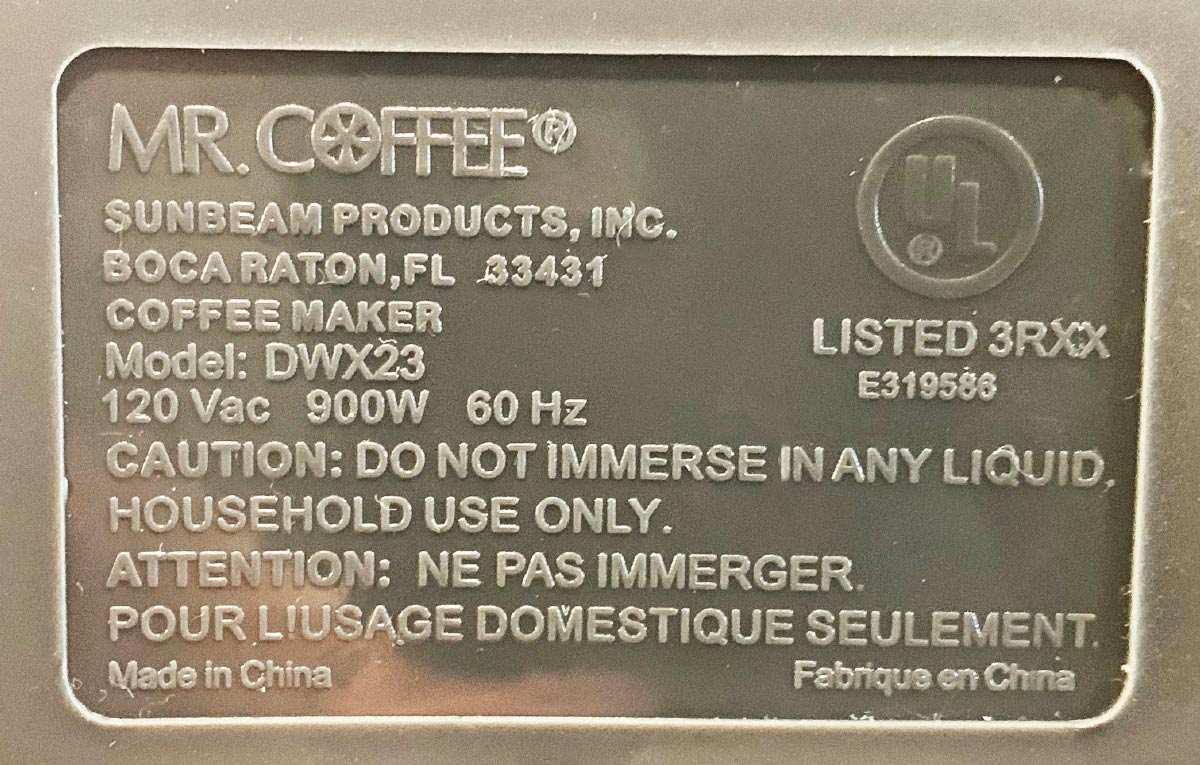
First, let’s talk about sizing. Inverters are sized in watts, so the first thing you need to do is add up all of the wattage of the 120-volt AC appliances you have or are likely to use at the same time. For example, you may have a 1,000-watt microwave and a 400-watt television. Is it possible that you may be using both, for a total of 1,400 watts? Certainly. Who doesn’t microwave popcorn while watching a movie? So, for this example, you’d want 1,400 watts. However, it’s best to go for a higher-rated inverter to allow for circuit changes or power surges — so an 1,800-watt inverter would probably be ideal.
“Another thing to consider is surge capability,” said Wilson. “Some loads, like motors, which need more power to start (like roof A/C units), need inverters with either higher output power or higher surge power. Most inverters surge at twice the rated output power, but if you need more than that, upsize the inverter for more surge capability.” There’s no need to worry about draining your battery more quickly with a larger inverter, either, since drain is related to the actual load, Wilson said. When in doubt, it’s better to have more inverter power than you think you need than to find out you don’t have enough.
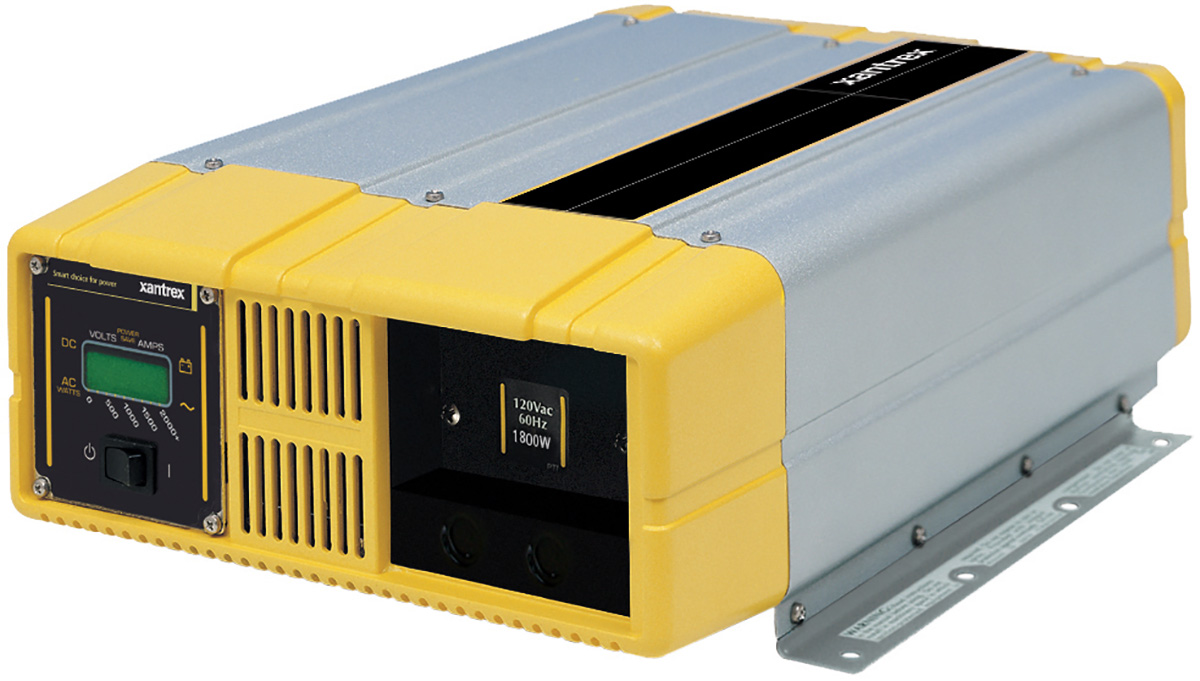


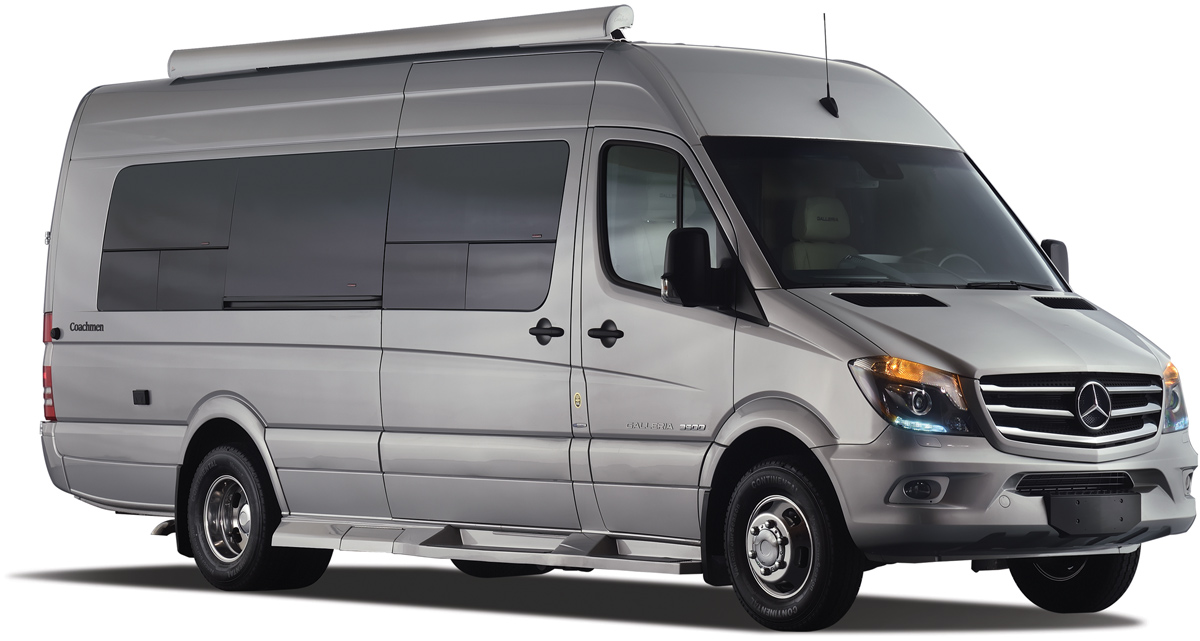
Inverter chargers, when used in combination with an appropriately sized battery bank and solar system, are a great choice for compact applications where there may not be room for a generator (like a camper van, Class B motorhome, truck camper or small travel trailer). Chandrani noted that the Coachmen Galleria is just one example of a contemporary Class B motorhome that uses only a 630-amp hour (Ah) lithium ion battery pack and a FREEDOM XC PRO 3,000-watt inverter/charger to power the on-board microwave and all wall outlets.
As battery and appliance technology continues to improve, RVers will have more options when it comes to powering household devices. And that means the freedom to use modern conveniences when we need them.