
Boondocking on Batteries
[maghub_sidebar]
Boondocking on Batteries
Bronze and Black colored Battery
Installing a Magnum Energy MagnaSine 3000 Hybrid inverter/charger
By Bob Livingston
Photos by the author

Bronze and Black colored Battery Boondocking on
Batteries
Installing a Magnum Energy MagnaSine 3000 Hybrid inverter/charger
By Bob Livingston
Photos by the author
P

ower inverters are available in a number of sizes — with correspondingly greater wattage output — to fit the requirements of just about any RV. Smaller, portable inverters with fewer features can be found for less than $400, while larger units usually require a permanent installation and can set you back as much as $2,000. Those prices, by the way, are only for the inverter. If you only need a portable unit, you can hook it up yourself. Permanent installations, on the other hand, usually require the expertise of a knowledgeable technician.

The owner of this fifth-wheel had a number of requirements for the unit’s inverter: pure sine output waveform technology, the ability to charge lithium iron phosphate batteries, maximum off-grid power output and the ability to charge onboard batteries when hooked into shore power or when using the AC generator. The inverter selected — the MagnaSine Hybrid 3,000 MSH3012M inverter/charger from Magnum Energy — provided yet another benefit: the ability to combine energy from both incoming AC power and batteries to power loads. (With most inverters, it’s an either/or proposition.)

Magnum Energy
Magnum Energy’s MagnaSine 3000 Hybrid inverter/charger was chosen for this installation to accommodate lithium batteries and the projected power usage on a typical day of boondocking.
Rated at an output power of 3,000 watts (3,900 peak watts), the inverter is able to power virtually all of the fifth-wheel’s 120-volt AC components — induction stove, microwave, coffee pot, satellite TV and theater seats — albeit not all at once. “3,000 watts is a lot of power,” the owner noted during a multi-day installation that saw the inverter tied into an expansive power-management system on the fifth-wheel. “It’s a very good charger and works well with lithium batteries.”
Technician working
Before the inverter was installed, the technician identified the various circuits in the fifth wheel and made sure the circuit breakers were marked properly, which was not the case. You’ll have to determine which circuits will be serviced by the inverter. In this case, everything except for the air conditioners is serviced by the inverter.
Cabling/wiring
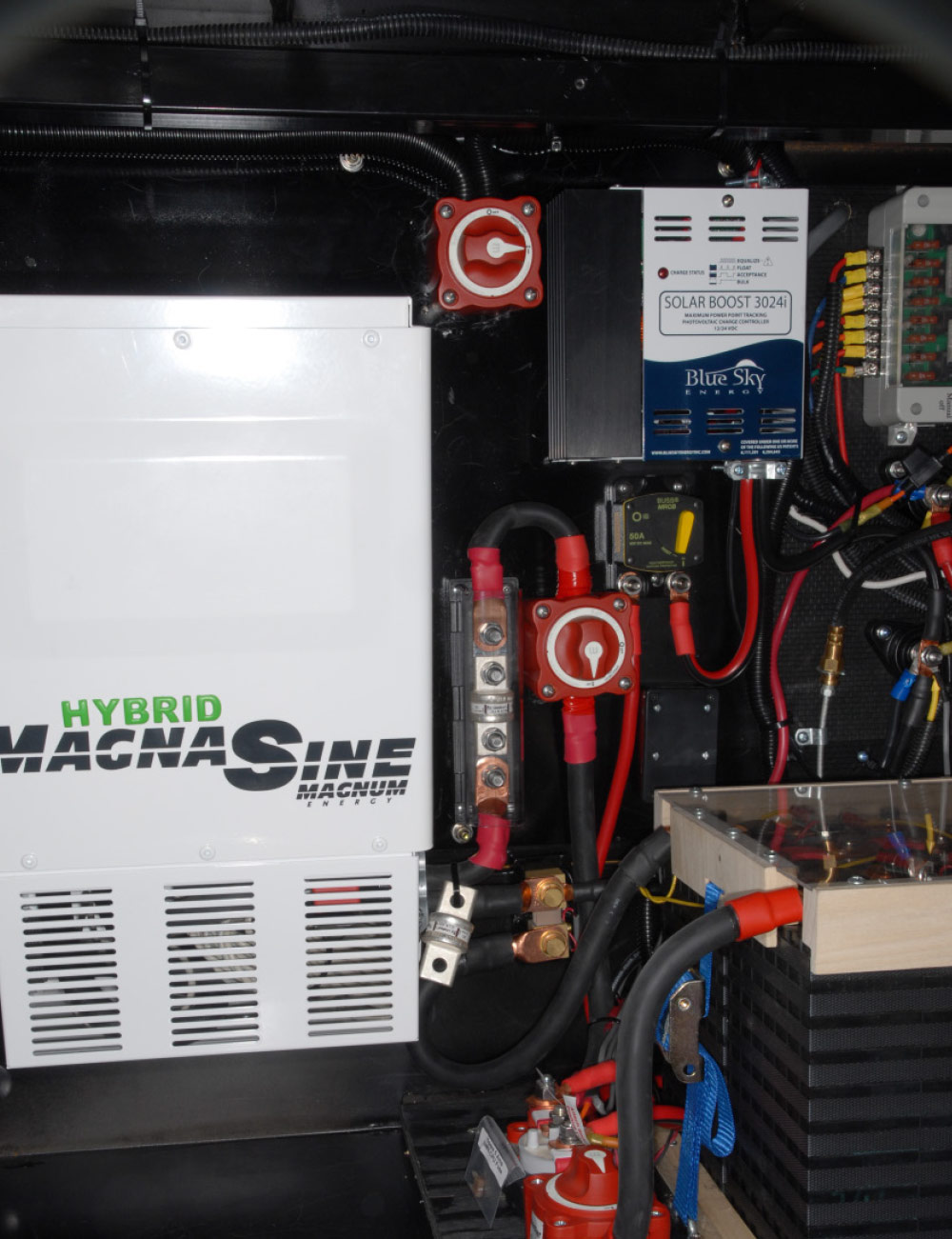
It took the better part of a day to straighten out the “spaghetti bowl” of wiring before running the cabling/wiring from roof-mounted solar panels and the inverter/charger.
tubing
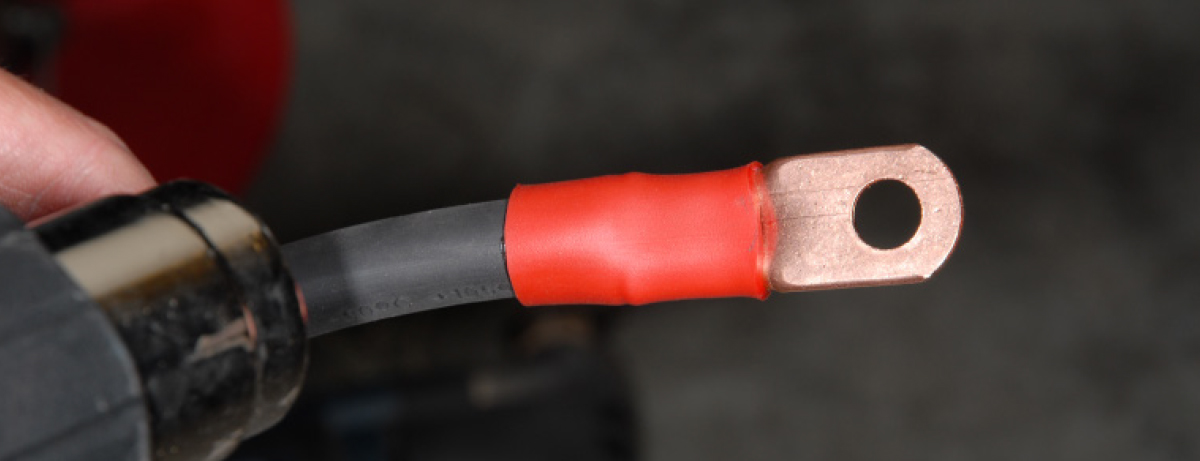
Color-coded, heat-shrink tubing was used to protect all the terminals connected to the cabling throughout the system. Not only does this protect the terminals, the color coding makes it easy for future service people to identify cable polarity
Sub-panel
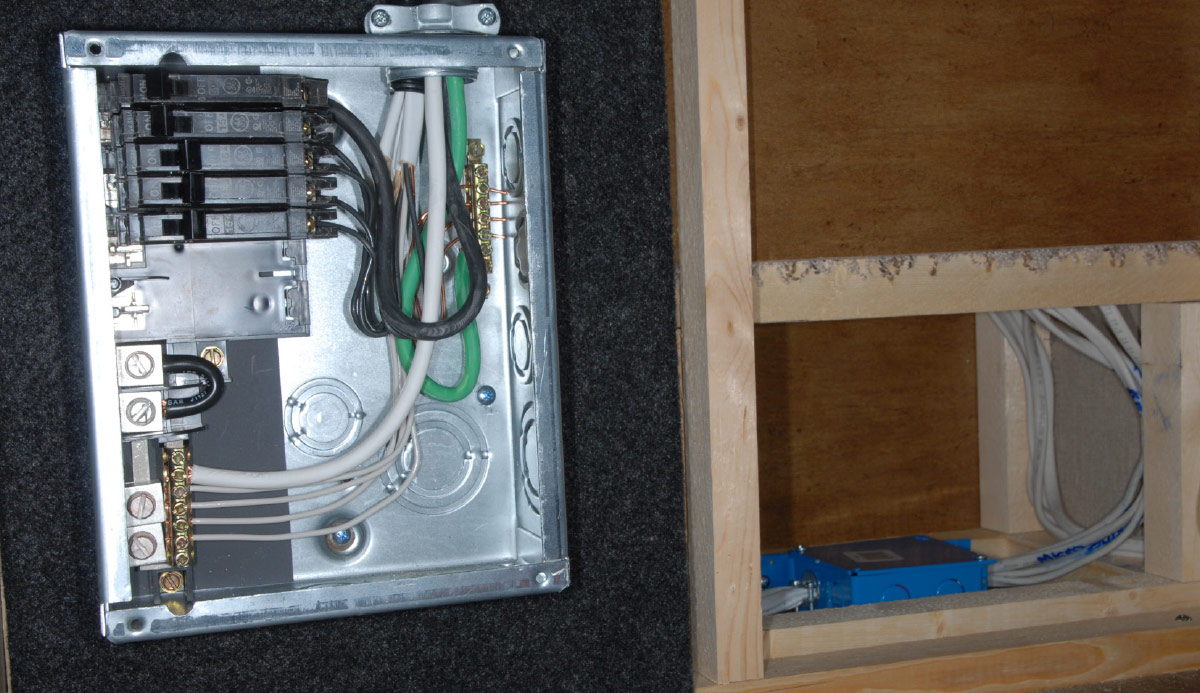
A sub-panel was installed in the storage compartment. The sub panel is necessary for distributing the power from the inverter to the designated circuits/appliances and requires properly sized circuit breakers.
Magnum Energy MagnaSine 3000
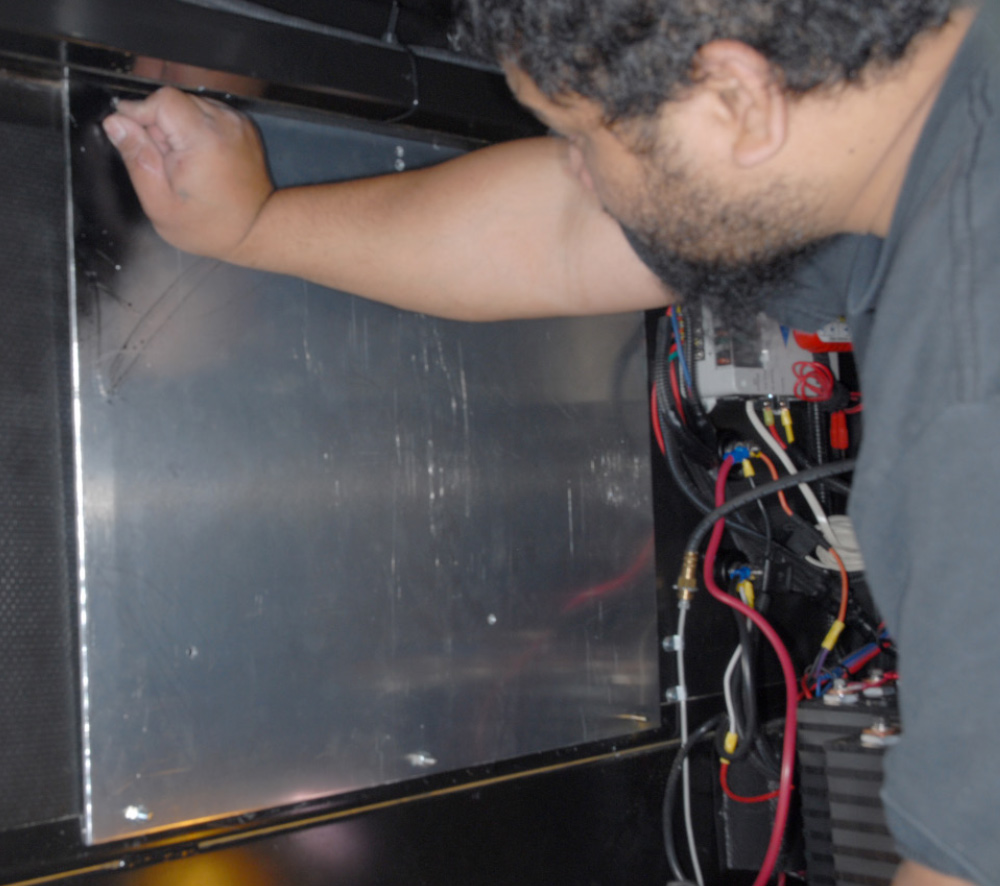
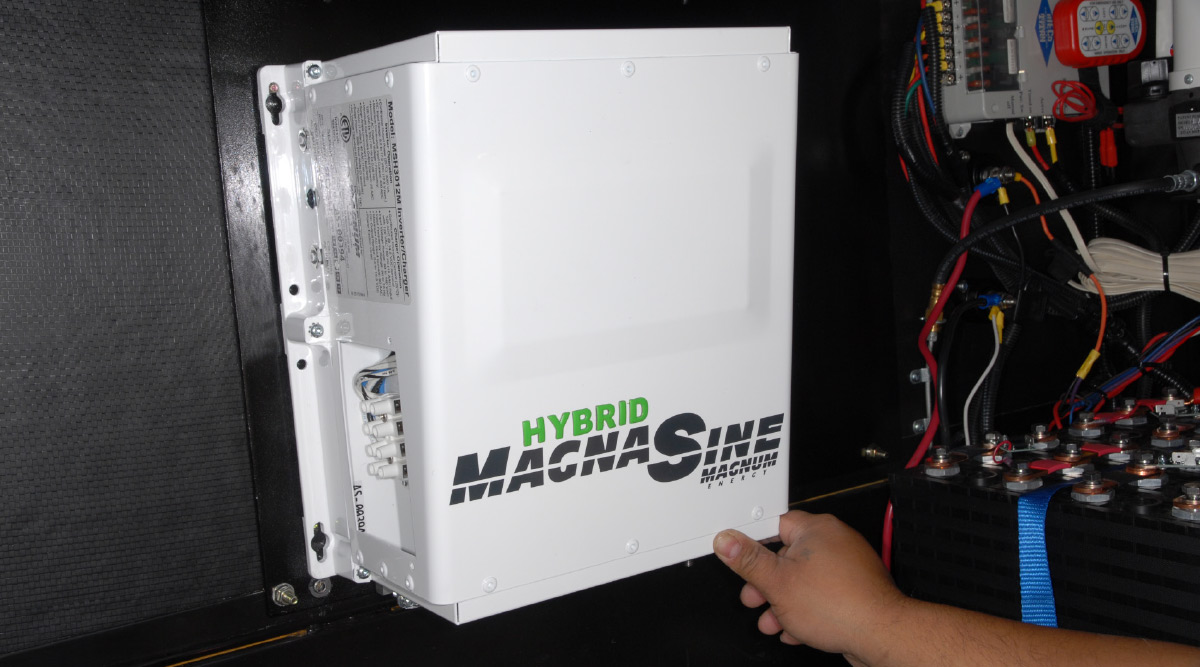
Since the Magnum Energy MagnaSine 3000 Hybrid inverter/charger is quite heavy, an aluminum panel was cut and mounted to the steel bracing in the front fifth-wheel compartment. The aluminum panel was painted black before mounting the inverter/charger. Once in place, the inverter/charger was solid as a rock; without this panel, the inverter/charger would have lasted maybe one day on rough roads.
Inverter/charger
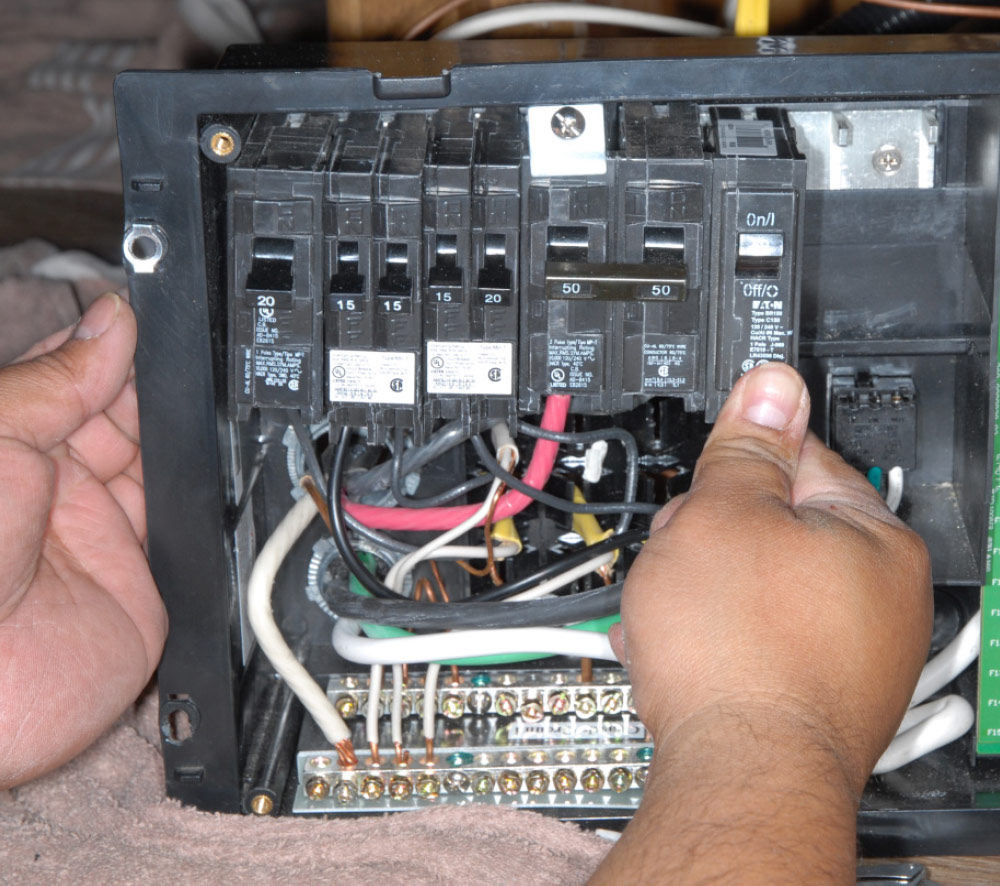
The inverter/charger was wired into the existing distribution panel and a 50-amp breaker switch was added.
6 AGW wiring for the sub-panel
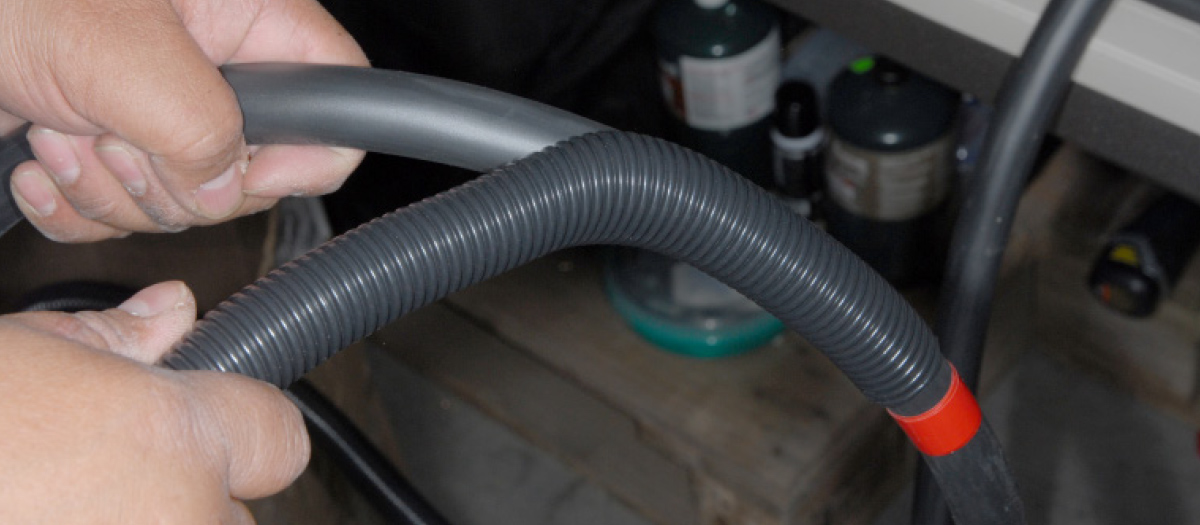
Magnum requires a minimum of 6 AGW wiring for the sub-panel and 4/0 AGW battery cables. All cables in this installation were wrapped in split loom for added protection.
White conduit box
Cables routed
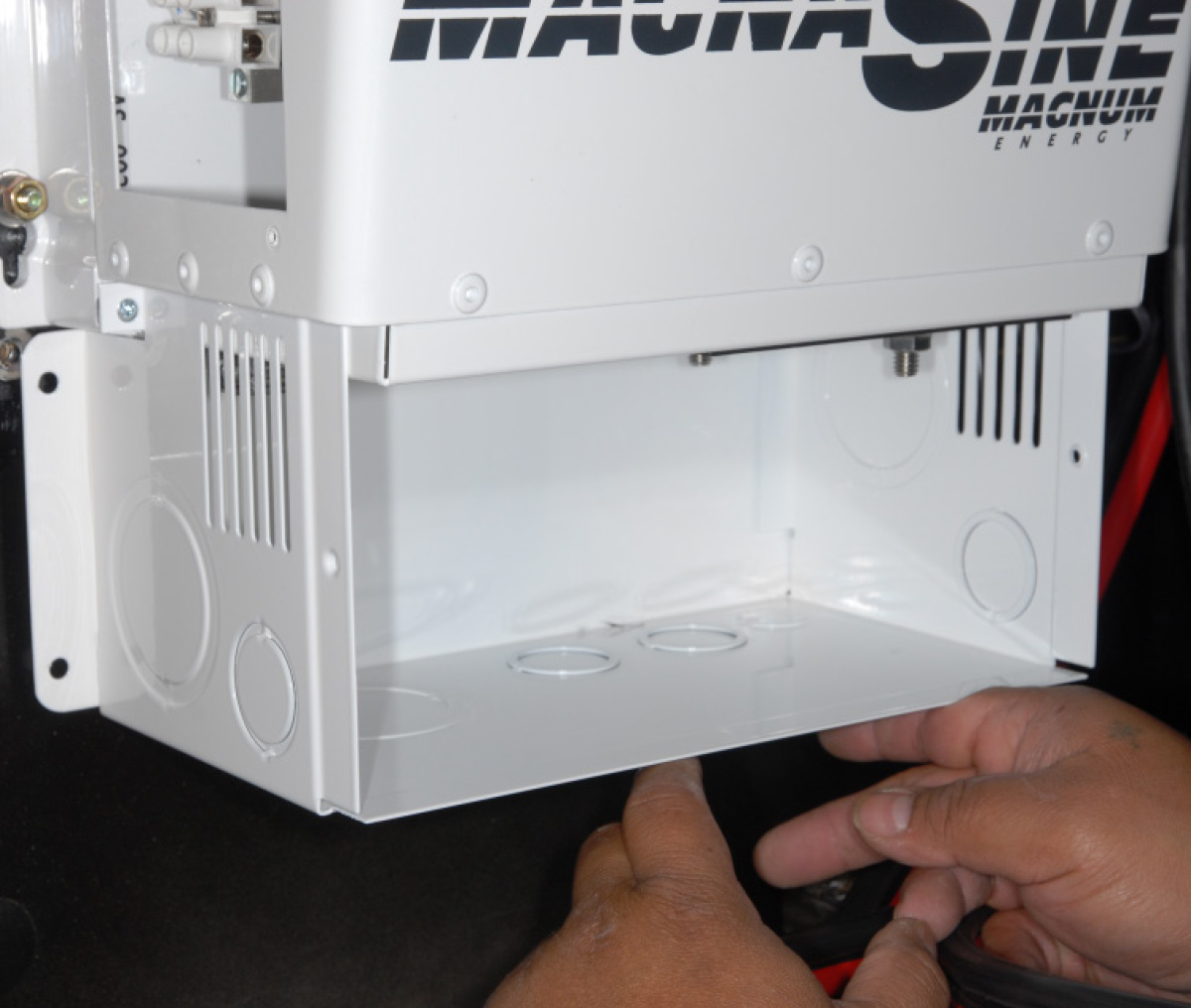
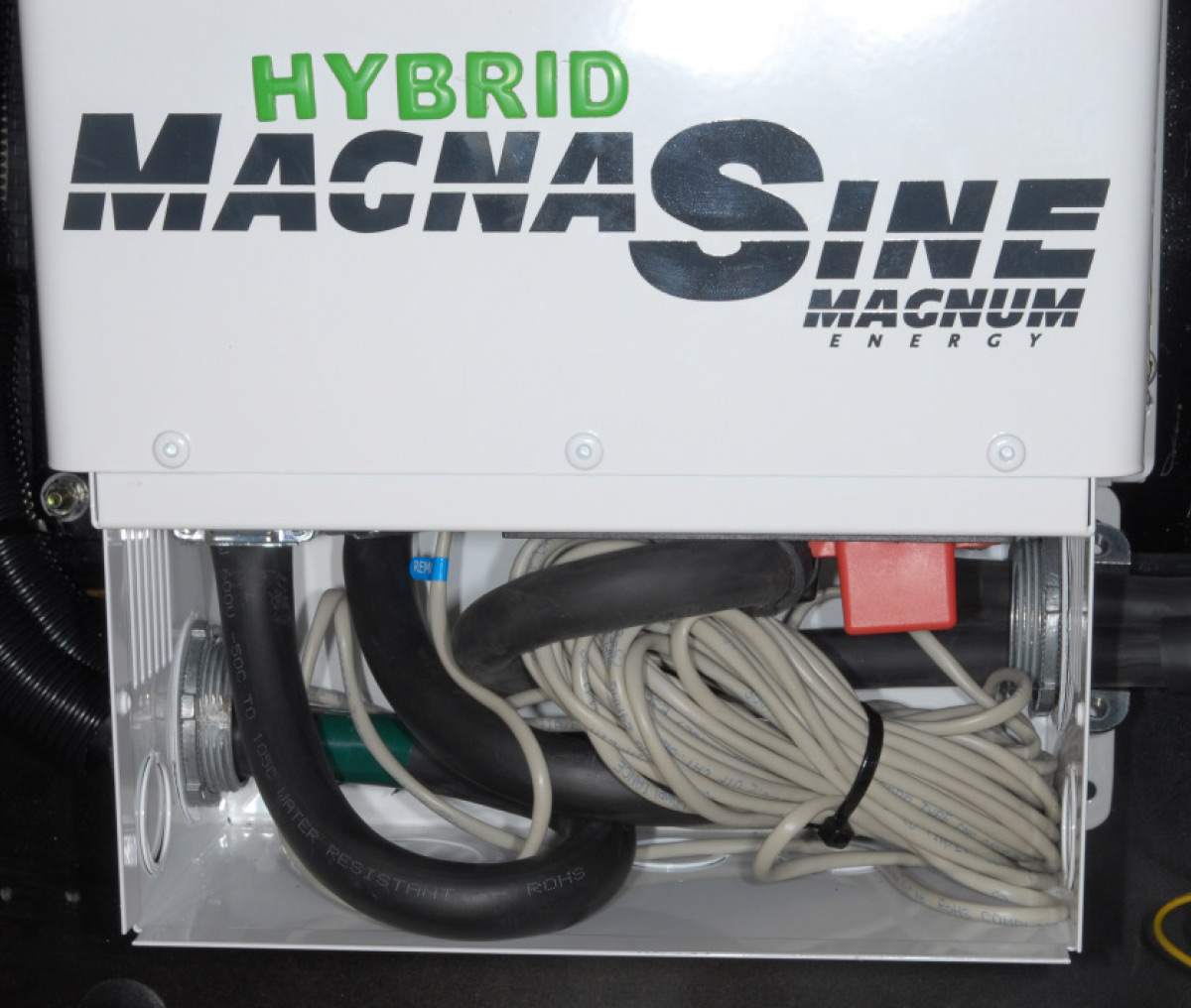
A conduit box was added to the bottom inverter/charger, which provides protection for the wiring in the event stored items shift during travel. The box is required by Magnum when the inverter/charger is mounted in a vertical position and may be required by code. Regardless of the requirements, adding the conduit box cleaned up the look of the installation. Cables routed to the batteries fit nicely in the conduit box, along with the wiring needed to connect the remote panel mounted inside the fifth wheel.
Mounting
Mounting the inverter/charger along with all the solar system components and lithium batteries made perfect sense — keeping them isolated from other stored items.
cables and box
All the cables, required breakers, fuses and disconnect switches are connected to meet code and provide a neat and clean presentation, one that makes servicing easy. Once everything was in place, a custom metal mesh divider (not shown on left) was fabricated and installed to prevent stored items on the passenger side from shifting to the area with all the components and cables.
Remote panel
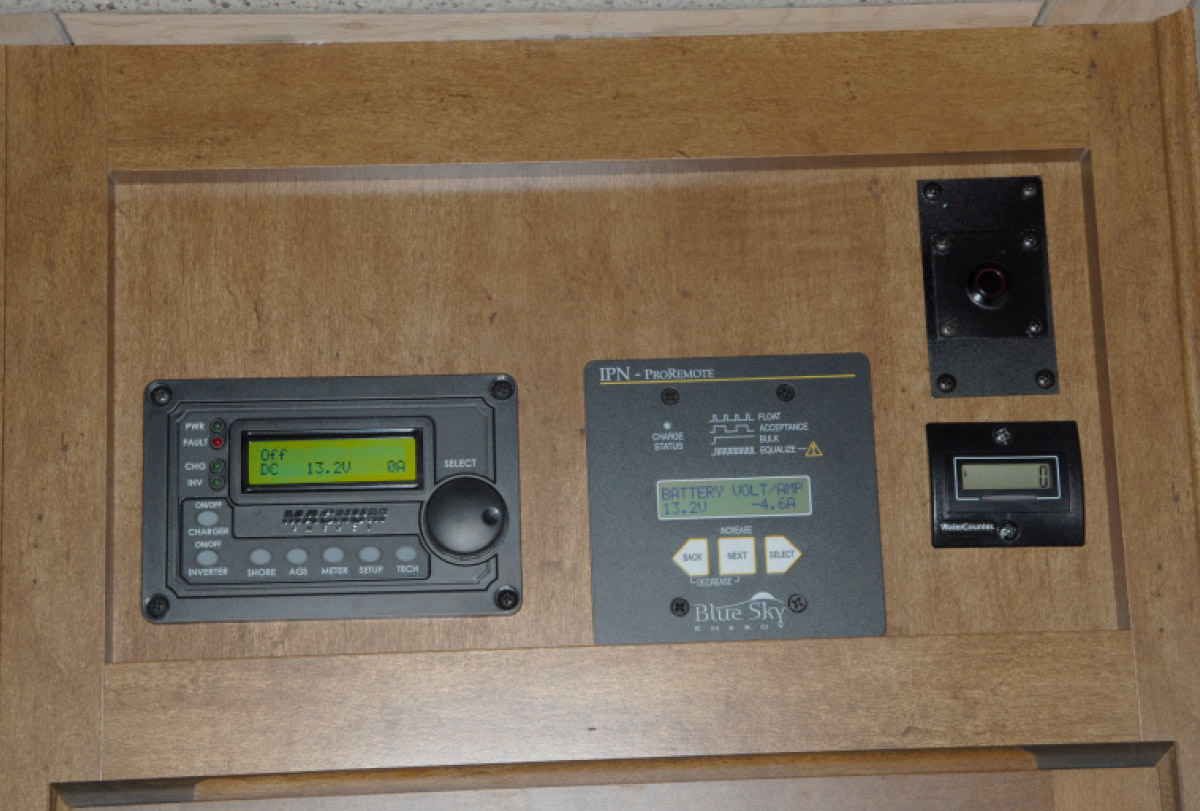
Remote panel allows complete control of the inverter/charger functions and can be installed in a convenient location. Here the panel was mounted next to the solar regulator remote, among other accessory panels.
Source:
Sensata Technologies Inc.
(800) 553-6418
Magnum-dimensions.com