



aking backroads to new adventures can be a lot of fun, but they are not without their challenges. As soon as you camp away from the conveniences of RV parks and campgrounds and that all-important umbilical electrical cord delivering the ability to camp with full hookups, you need a source of auxiliary power to operate the A/C, induction cooktop, refrigerator, dishwasher, ceiling fans, coffee maker and hairdryer among other appliances that plug into a standard 120-volt AC wall outlet.
Boondocking, or camping “off-the-grid,” means you have to rely on electricity provided by a generator or the RV’s battery bank to deliver the proper electrical needs to run 120-volt AC appliances and accessories. The downside with generators is they can be noisy and smelly, which takes away from the peacefulness of boondocking. Generators also require fuel.
Unfortunately, batteries don’t have the power on their own to run those power-hungry appliances and accessories — but their electrical energy can be modified and amplified using an inverter. The inverter takes the juice from the 12-volt DC house battery (or battery bank) and transforms it into 120-volt AC like that supplied by a local power grid. That’s why many new RVs, other than many tiny trailers, have an inverter as part of the factory-installed electrical system.
Basic Sine Language
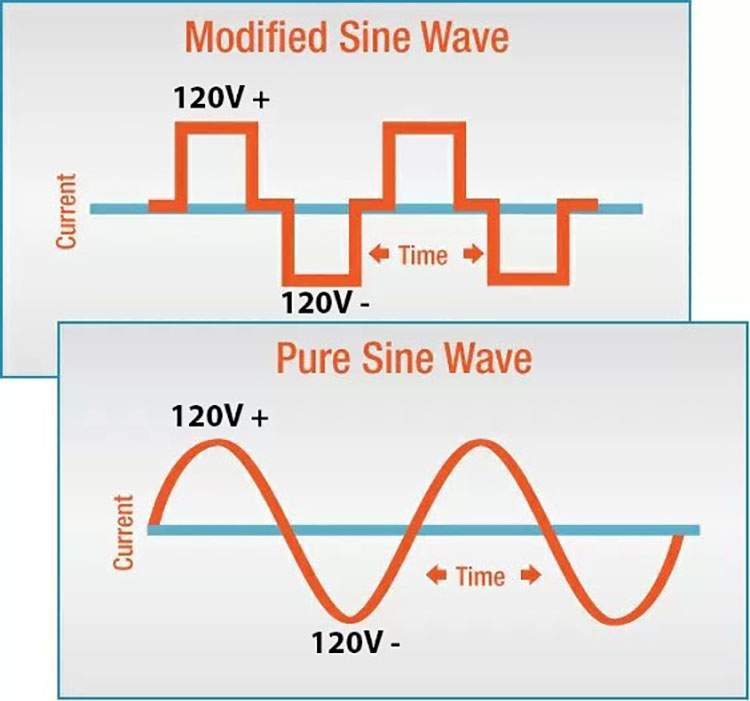
An inverter takes the incoming 12-volt DC battery power and provides 120-volt AC that is dispersed through the RV’s wiring network to power outlets, appliances and accessories. If you could see the “current” that “pure sine wave” inverters create, it would look like perfect little waves on an oscilloscope, a pattern that duplicates the same electricity powering a home.
But not all inverters deliver pure sine current. “Modified sine wave” inverters, the lower-priced variety, create electrical waves that have squared-off steps as the electricity alternates, instead of one smooth wave form. These types of AC-to-DC inverters can cost half as much as the pure-sine variety. Modified-sine inverters are not generally recommended for RV use.

Petersen explained the reason modified sine wave inverters shouldn’t be used in RVs is because they don’t supply the type of electrical current that sensitive electronics, CPAP machines, delicate medical equipment, AC motors and compressors need to operate efficiently.
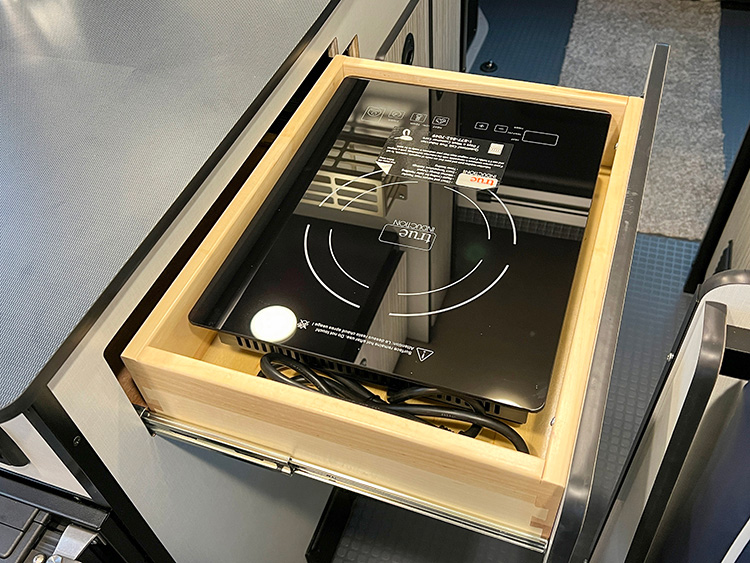
Appliances such as refrigerators, microwaves, air conditioners and compressors that use AC-type motors fed by modified sine current operate at much lower efficiency. They also can make fluorescent lights hum and buzz — and induction cooktops, which are becoming very popular even among the off-road trailer crowd, don’t work at all.
How Long Does an RV Inverter Last?
Because many RVs come that from the factory with an inverter are intended to provide off-grid power, they are not generally something RV owners ever think about — until the inverter stops working.
Like any other electronics component, an inverter has a limited life span. In general, according to RV electrical industry experts, an inverter is good for 8-10 years under “normal” RV use.
“Anytime you’re asking somebody the life expectation of an electronic device, it really comes down to how often are they using it,” said Laura Dejong, vice president of marketing at AIMS Power, a leader in inverters and solar technology. “Are they pushing the inverter to its max? How long are they using it per day? Where and how is the RV being stored? What is the environment that it’s used in — really high dust, humid, cold?
“There’re so many variables when you talk about the life expectancy of an inverter in an RV,” added Dejong. “The more you use it and the harder it’s used, the shorter the life expectancy. In many instances, eight years is a good run.”
Upgrading Older RVs With Modern Inverter Technology
Garrett Towne, president of AM Solar in Springfield, Oregon, one of the leading RV-oriented solar and electrical aftermarket installers in the country, told RV Enthusiast when an inverter does fail, RV owners should replace the old unit with the newest technology because today’s pure sine inverters are a big performance step above those being made even just a couple years ago.
“There would be an improvement on the battery draw: more efficient, better monitoring, better charging,” added Go Power’s Petersen. “This improvement over the older inverters would probably result in RV owners seeing they can draw power off their house battery for longer periods of time with a new pure sine inverter.”
Towne, Petersen, DeJong and other inverter experts all agree that replacing OEM inverters that have failed, or that are more than five years old, with one of today’s upper-end pure sine inverters will provide a lot of electrical benefits to RVers.
Many of the newest inverters are multi-purpose and space-saving, too.
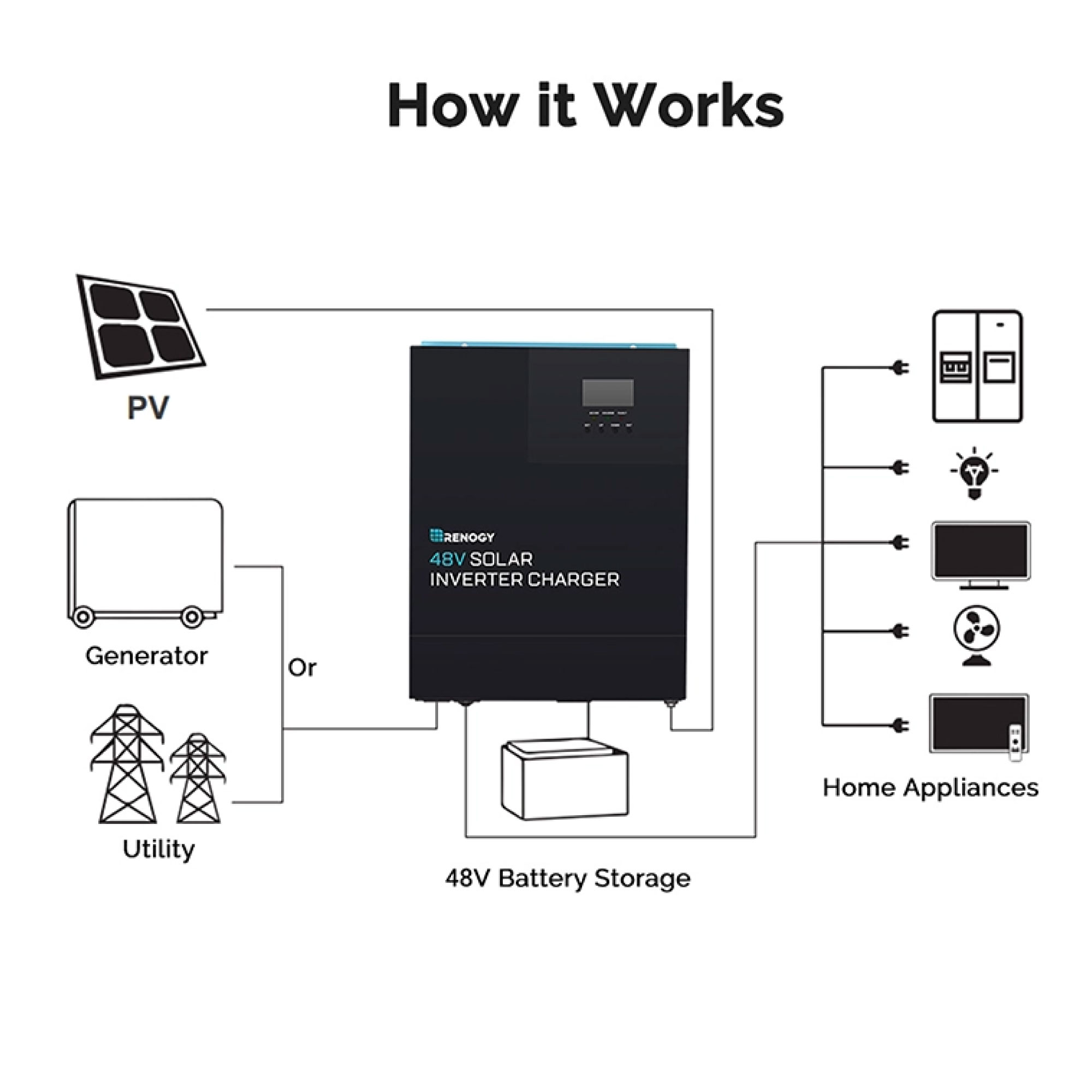
A few “hybrid” inverters even have a “boost mode” or “bypass” where sophisticated circuitry allows it to automatically tap into the house batteries to supplement a lower-amp shore power system when the RV electrical load exceeds the current shore power can deliver. This can come in handy when plugged into 15-20 amp shore power or running off a generator.
Lithium Batteries Need Top Quality Inverters
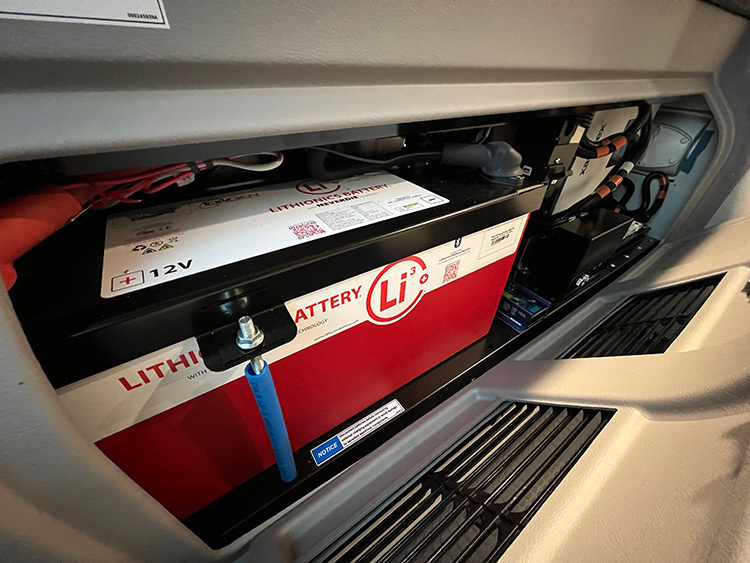
Another reason to upgrade to a high-tech pure sine inverter is when an older RV is being upgraded from lead-acid batteries to Lithium batteries. The latter take an entirely different charging profile than the old lead-acid batteries. An inverter has to be matched to the RV’s battery bank, as does the battery charger. If not, the inverter and/or the batteries will suffer.
“Most RV inverters have a wide range of DC inputs and have no issue running off the new lithium batteries. But there are several different chemistries of lithium batteries,” said Andrew Frey, an electrical engineer at AIMS Corporation, “and the customer would need to confirm compatibility between the inverter they have and whatever lithium battery they are installing.
“The charging system may also need to be upgraded for the new lithium battery, or an older inverter/charger may need to be upgraded if it does not support lithium charging,” added Frey. “In general, a lithium battery is not a ‘drop-in’ replacement when it comes to use in older RVs.”
Pairing the lithium battery (or battery bank) with the correct inverter/charger is a critical factor many RVers don’t think about. The wrong pairing could be a costly mistake by damaging the battery.
“It’s really important to understand the charge requirements of the lithium batteries an RVer has,” added DeJong. “AIMS Power lithium batteries charge at a little different rate or voltage than maybe one of our competitors. Therefore, the factory electrical system/inverter in an older RV may not be set up to give our [lithium battery] a full charge, or it’s not going to charge correctly.
“Our inverter/chargers have eight different charging profiles. What we recommend is the user needs to find out from the battery manufacturer what the charging requirements are if they’re not using our batteries. If they’re using our batteries and inverters together, then we can tell them, ‘put it on setting four’ or one of the other settings. The proper maintenance of lithium batteries is all based on charging profiles.”
That’s why when it comes time to buy a new inverter for your RV it requires focus on those brands/models that are “pure sine wave” as well as the needs of the house batteries it’ll be connected to when the off-grid switch comes to play.
Granted, pure sine inverters and multi-purpose inverters will be much pricier than their modified-sine counterparts. But the cost difference is worth the benefits.
“Experience has taught us that Pure Sine inverters are the only way to go,” said Towne. “Properly rated pure sine inverters will work well with everything you want to power in an RV. Appliances run smoothly. Lights are bright. All your personal electronic devices work trouble-free. Pure sine electrical power maximizes the efficiency and lifespan of everything electrical in an RV.”
Choosing the inverter with the correct power output for the way each RV is configured is very important. How do you choose the right inverter? Tally up the number of watts being used during peak period, then add 20% for a little cushion. There’s no need to pay for wattage you’re not going to use, but at the same time getting an inverter that’s underrated for the demand will have a shorter life or shut down just when you need that power.
In addition, inverters tend to work at their optimum efficiency when delivering 50% to 70% of their maximum rated load capacity, according to Go Power’s Petersen. “Size the inverter and battery bank correctly. Inverters are not 100% efficient and are less so when running in max power output. RVers need to make sure there is a bit of ‘head room’ above max load they might need to run.”
Petersen noted that headroom includes accounting for the few seconds of start-up or “surge” ratings of any electrical item that has a motor or compressor, like a residential refrigerator, microwave, or the A/C atop your RV. For example, a Dometic Brisk II 15,000-Btu A/C unit takes about 3,000 watts to start and then settles down to 1,725 watts once it’s running. (Generally speaking, an RV A/C requires about 100 watts per 1,000-Btu when cooling and more than double that for surge.)
The easiest way to figure out that sweet spot when buying an inverter is to use a kilowatt meter that’s tied into the RV’s battery bank — or by using an amp meter (amps x volts = watts) tied into the battery feeding the inverter. Another option is using an inexpensive electricity usage monitor that plugs into the wall outlet where the appliance plugs into the monitor.
Turn on all the appliances/accessories you’d be using at the same time while boondocking and note the wattage consumed (or monitor them individually). You can also take the information off the UL tag of most electrical products or make a guesstimate using a number of online wattage-use charts that would help determine the proper size inverter for the task. We’ve also included a chart of popular electronics used while camping and the power requirements of each.
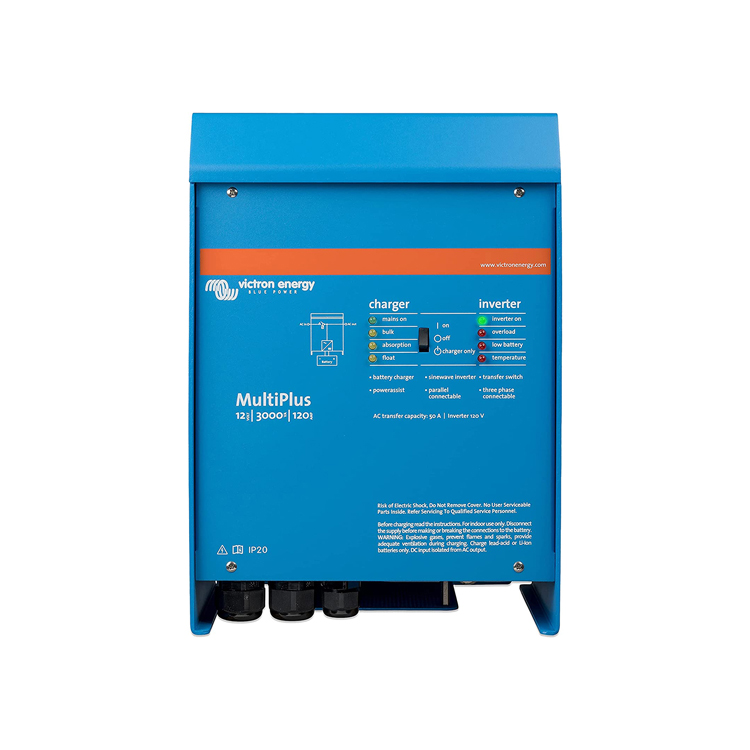
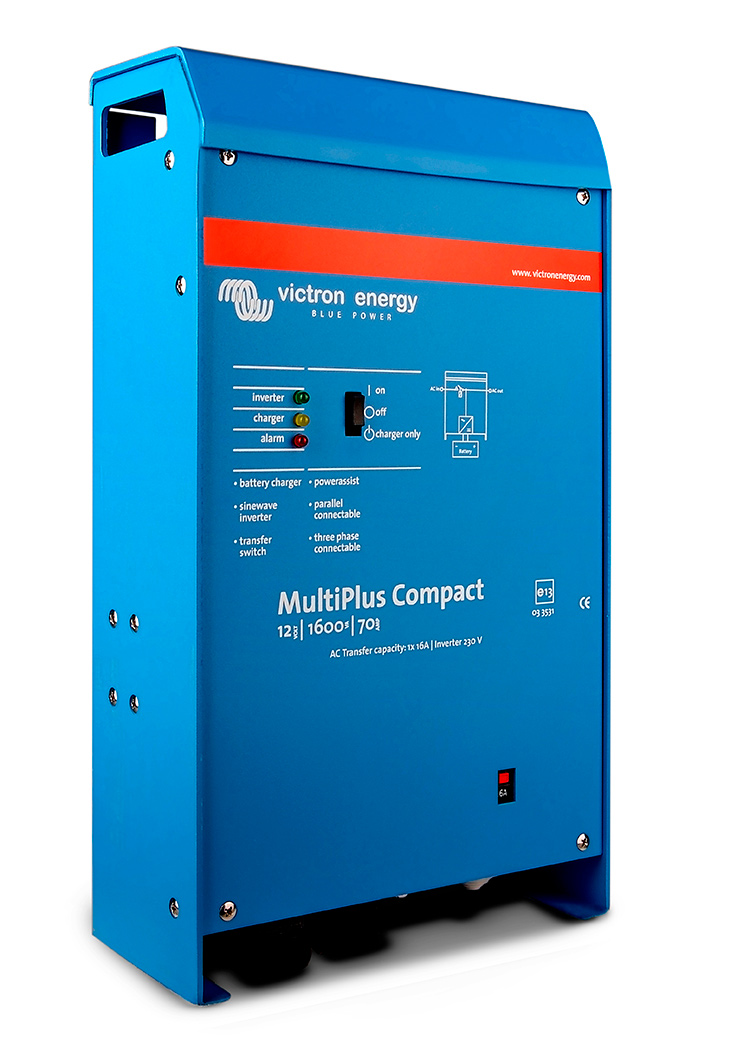
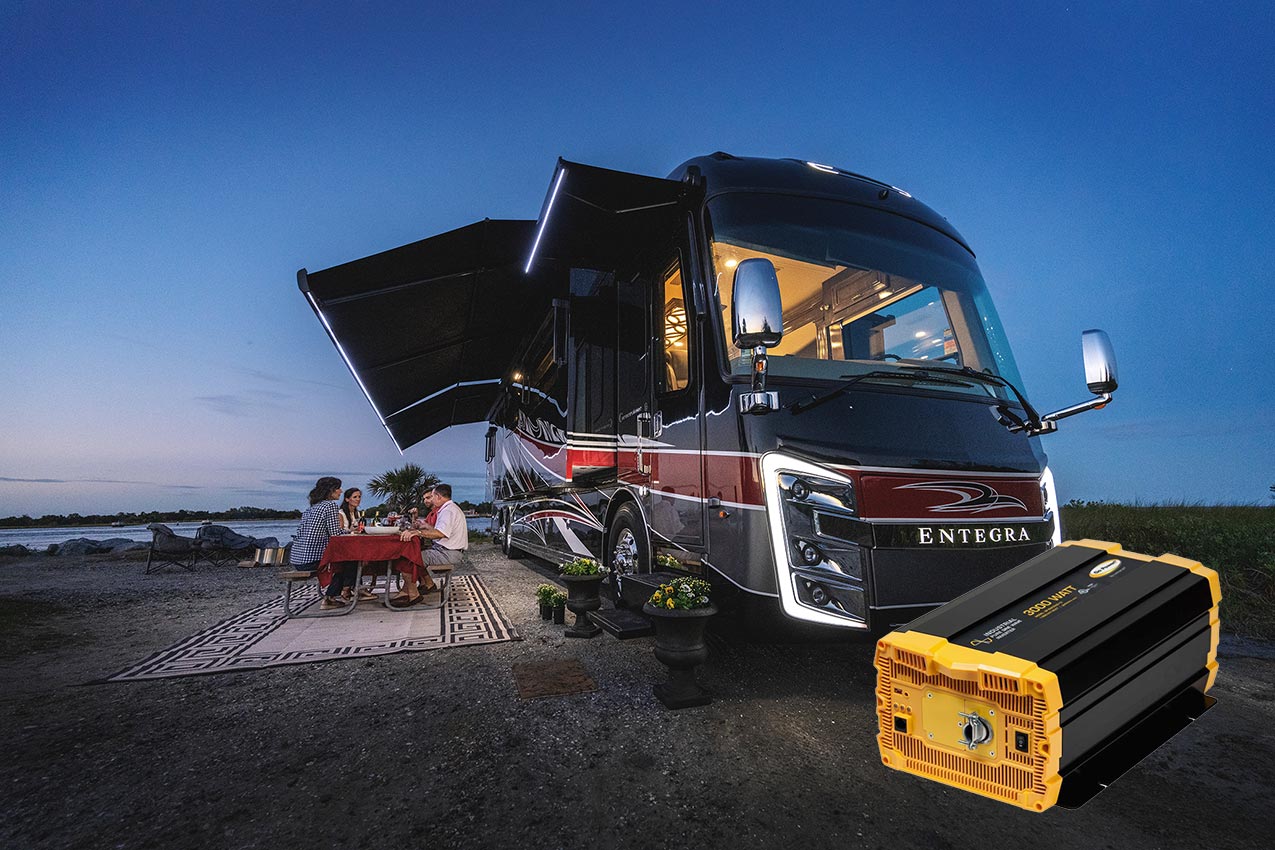
Once you know how much wattage is required for your particular RV’s boondocking needs, then it’s a simple matter of buying the right size inverter to deliver those off-grid demands using the battery bank instead of the generator. To help in that search, we’ve highlighted a few of our favorites that reflect the newest in pure sine wave inverter technology.


GFCI outlets. 2-year warranty.